

Contact Us
info@ivi.ie
+353 1 708 6931
Research Clusters
Cluster Lead: Prof. Martin Curley
The Digital Health Ecosystem (DHE) is a guided open collaborative ecosystem which uses Stay Left, Shift Left-10X (SL2-10X) as its shared vision/paradigm, and uses the breakthrough Open Innovation 2.0 methodology as its innovation paradigm. The DHE focuses on three vectors: Education, Exploration and Exploitation.
The DHE brings together academia, industry, government, and citizens/patients who work with shared values toward the shared vision of Stay Left, Shift Left–10X. This vision aims to keep people well in their homes and communities (“Stay Left”), move care earlier and closer to the patient (“Shift Left”), and deliver tenfold improvements (“10X”) in outcomes, cost, access, and experience through digital innovation.
The DHE’s exploration mission focuses on identifying emerging technologies, models, and opportunities that can transform health systems. This includes horizon scanning, early-stage experimentation, and the development of new digital pathways that support prevention, early detection, and proactive care. Design Science Research underpins the research methodology of the DHE, ensuring that innovations are rigorously designed, tested, evaluated, and iteratively improved in real-world contexts.
The DHE applies its own ‘Open Innovation 2.0‘ principles across a network of health living labs operating in real clinical and community environments. These living labs accelerate innovation by enabling rapid prototyping, evaluation, and scaling of digital health solutions. Key sites include Mater Misericordiae University Hospital, Dublin and Royal Hospital Donnybrook, Dublin. These environments demonstrate how guided open collaborative ecosystems can deliver system-level change.
The Digital Health Academy is the platform for learning and has evolved from the HSE Digital Academy founded by Prof Martin Curley in 2019. It is designed to accelerate digital health capability across clinical, academic, industry and policy communities. Built on the SL2-10X doctrine, the Academy brings together global thought leaders, cutting-edge research, and transformative education to shape a new, collaborative future for health and care.
International Digital Health Summer School
A global intellectual supercollider for clinicians and leaders.
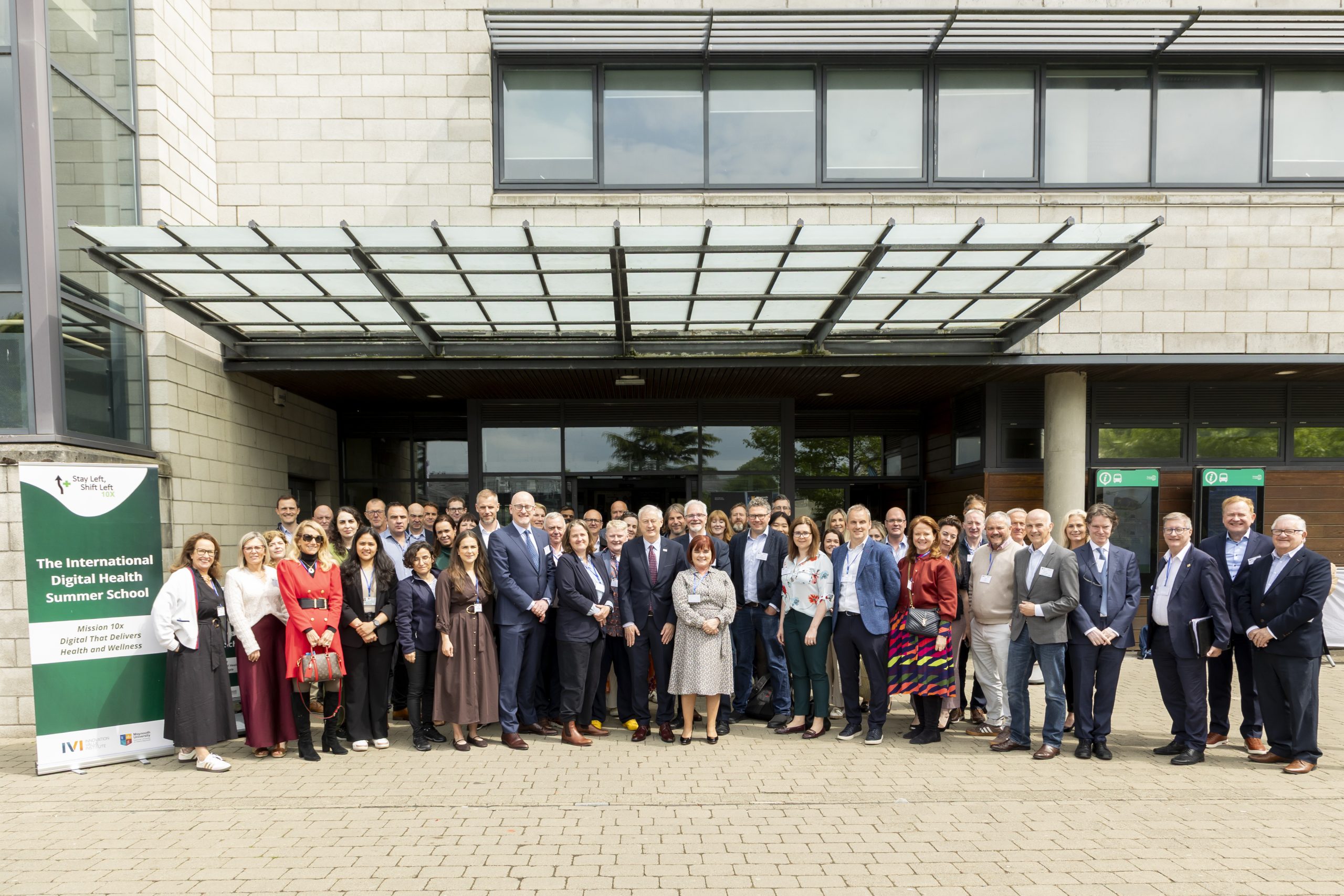
Founded in 2023, the International Digital Health Summer School is not a conference – it is an immersive, high-intensity learning experience. Using the SL2-10X doctrine as its lens, the Summer School brings clinicians and leaders into close dialogue with world-renowned thinkers and practitioners. Participants learn, debate, and co-create new models for a “win-win” healthcare future in an intimate, collaborative setting.
International Digital Health Distinguished Lecture Series
Launched in 2024 with support from AstraZeneca, this lecture series brings internationally recognised health leaders to Maynooth University. Replacing the Digital Academy Forum, it provides regular opportunities for in-person networking, debate, and knowledge exchange.
Recent Distinguished Lecturers:
These sessions keep the ecosystem vibrant, connected, and forward-looking.
UNGA Digital Health Symposium
A global summit shaping the future of digital health
Founded in 2021 and aligned with the United Nations General Assembly, the UNGA Digital Health Symposium is inspired by the historic Solvay Conference of 1911. It serves as a global intellectual supercollider for the SL2-10X doctrine, convening leaders from medicine, technology, pharma and medtech.
The 2022 event saw the creation of the Manhattan Manifesto, a global call for cooperation and a new vision for health and wellness, while in 2024, over 150 leaders gathered across Northwell Health and Fordham University, New York. The symposium aims to set the strategic direction for global digital health transformation.
Whether you are a clinician, policymaker, technologist, researcher, or patient advocate, you can play a role in shaping the future of health. Get in touch with Cluster Lead Prof. Martin Curley to learn more.
Get in touch